11. Storytelling in one image: from the pen to the camera.
Ciao amici, buona Domenica! I hope you had a nice week :)
Mine was ok, at the end of the week I felt a bit tired, so I spent half of my Saturday reading. The book I am reading now though, is not very captivating… it is supposed to be a crime story, a sort of thriller, but I cannot feel the adrenaline peaks I was looking for (and cannot not even find a particular empathy for the main character). There is something off with the storytelling I guess, not sure if it is the pace of the narrative or the words chosen to describe the scenes and the personality of the characters.
However, this feeling (or lack of feeling) sparked me the idea for our coffee break snap of this week:
what is storytelling in photography and how to convey a “story” in one single image?
Let’s proceed step by step.
When I was at school and was taught how to write short assays, I learnt that the basic principles to create a compelling story (no matter if real or fiction), are:
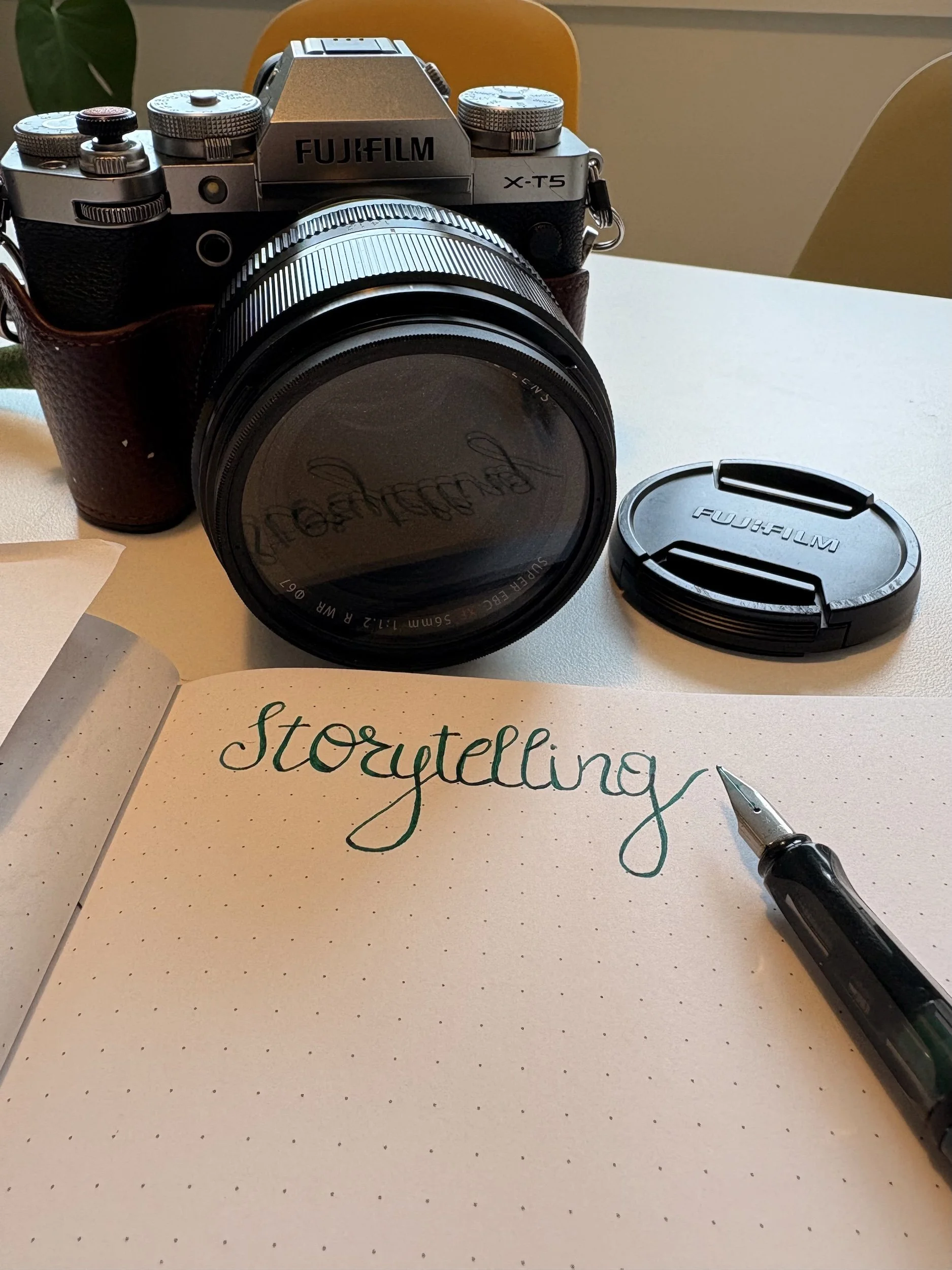
1. CLEAR NARRATIVE STRUCTURE: there should be a logical progression from introduction, development of the plot and conclusion.
2. DEFINED CHARACTER AND SETTING: the character is the life of the story, therefore should be central in the scene and its personality should be properly described in the narrative; feelings and emotions are key to create empathy in the readers and hook their attention.
The setting contributes to build the mood and is the backdrop of the scene: it should blend in the story without overshadowing the main character and should help the imagination of the reader to visualize the scenes. Describing characters and places existing in real life helps the writer to make the storytelling more “tangible”.
3. WRITE WITH CLARITY: the narration should flow and there should be a good balanced between the story and the more descriptive paragraph. A writing style that is too tortuous and complex will not arrive in a direct way to the readers, losing their attention and interest.
Can we actually translate these principles to our photography word?
I think so. Let’s try:
1. “Clear narrative structure” could be translated with: CLEAR COMPOSITION.
When we compose an image, we are choosing how we will tell our “story”, and before starting to press the shutter button, we need to take some important decision for our narration: are we looking from distance or do we go close to our main subject? do we want to use some specific compositional elements (i.e. frame into frame, leading lines etc) to direct the attention of the viewer to the scene or the subject is strong enough to catch the entire attention? Landscape or portrait orientation: which one is more suitable for this scene?
These may seem only preparatory decisions, but are the basis for our visual narration.
2. “Defined character and setting” in photography is: CLEAR SUBJECT, BOTH PHYSICALLY AND EMOTIONALLY.
This is key in photography, in my opinion: the subject should be clear, both physically and emotionally speaking.
With “physically clear”, I mean that when there are too many distractive elements, useless for the visual storytelling, the eye will tend to bounce in different part of the image and will not be able to recognize which is the subject to focus on (this is what I call “messy image”). The viewer will feel confused, and the narrative will not be powerful.
With “emotionally clear” I mean that the entire scene should contribute to clearly describe the emotions of the main character and evoke emotions in the viewer: the posture of the subject, the choice of colors, the light and contrasts are all important features in our visual storytelling. When the viewer shifts from being a passive spectator to empathize with the subject and the scene, we know that our photo has a powerful storytelling.
The main character may also be an object, not necessarily a person, but through the correct use of color psychology (see blog 4. The Power of Colors), lighting (natural or artificial) and composition, our photo should be able to convey emotions. This is our goal in storytelling (otherwise we take just aesthetically pleasing photos, and that’s fine… but is not storytelling).
3. “Write with clarity” in photography corresponds to: KNOW YOUR WHY.
Let’s be honest: if we are not sure of why we are taking a certain photo, what has attracted our attention, why should the viewer understand it? For example, if we are walking in the street and are attracted by a person with a red hat, but there is other 5 persons with a similar hat, and more distractive elements in between, and we don’t know what’s best to include in the photo so we include everything, how can the viewers know what our photo wants to show?
Decide which is your subject and work on subject isolation (go closer, or wait for the right moment when the other red hats are not in your frame), composition elements (avoid to have the distractions in your frame, look for leading lines or frame into frame…), light (is there a particular lighting that hits that particular hat that you saw? That’s your chance to shoot!)… These are all things we already know, but must be quicky put into practice when we see a potential subject for a photo.
I know, it is difficult to have all these elements in one shot. Sometimes there is just an interesting location and lighting but boring subjects, or the subject is amazing, but the place does not allow subject isolation… or everything is happening so fast that we do not have time to think of all we need to include in our photo in order to tell a powerful story. It doesn’t matter: click anyways, and the powerful shot sooner or later will happen. The important thing is to be able to train our eye how to look around and capture what we see (and feel).
I leave you a couple of photos that I exhibited this summer at a solo show in Italy called “ Inside-out: introspezione a colori” (you can see the details of the exhibition and entire collection in the section Exhibitions : INSIDE OUT ). This exhibition was entirely focused on emotions, and I was particularly interested to see if these images could actually evoke emotions in the viewers.
This is what some of the guests told me, and which are the elements that I think helped me expressing those feelings:
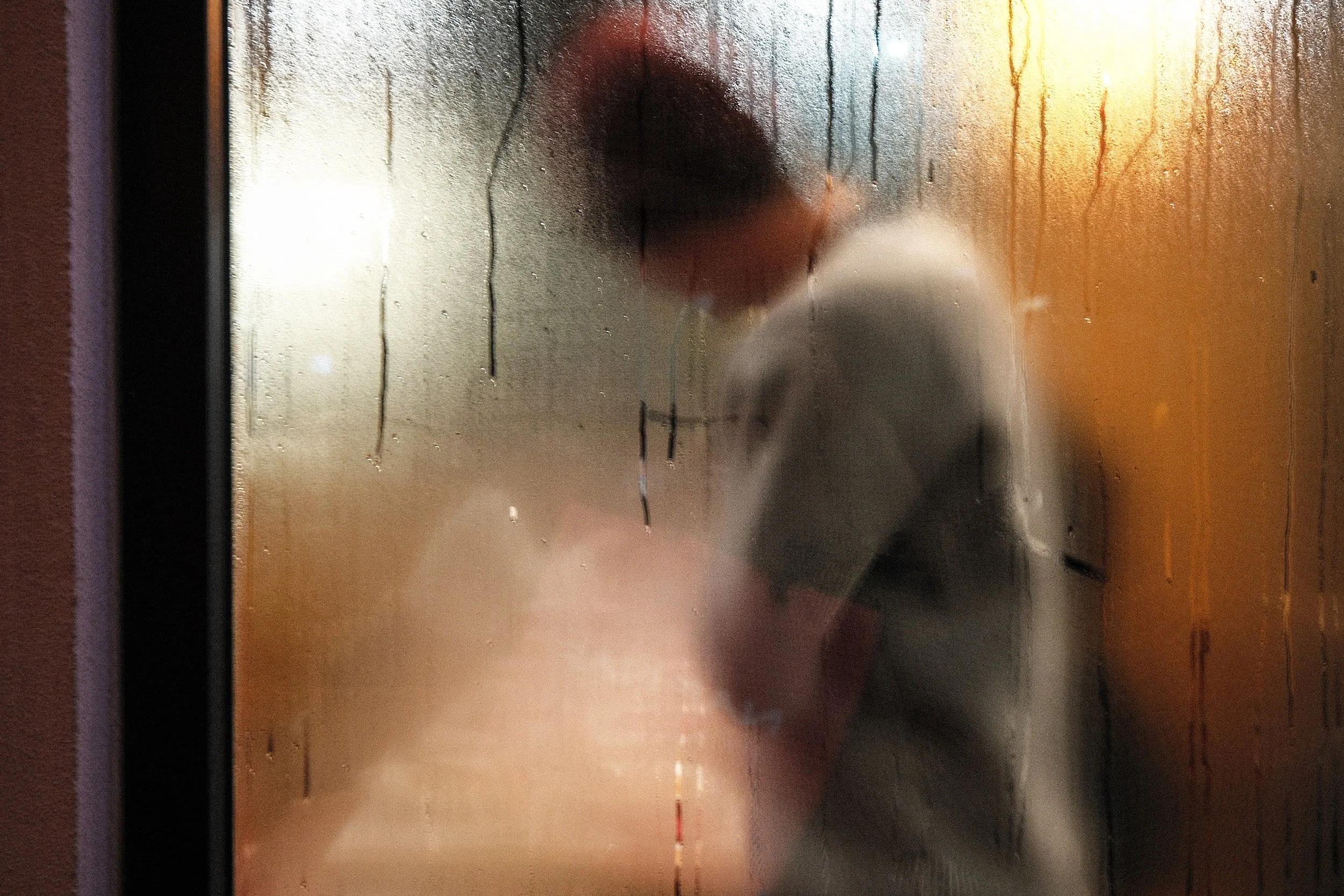
Regret/Rimpianto
Guest: “AAAAW… This person looks sad, suffering… the drops on the window are tears… I feel this way when I have a drilling thought in my mind, and cannot do anything about it, so I am sad, and want to cry but I cry inside”.
————————————————————————————————————————————
I think that the posture of the subject was key to help me convey the feeling, together with the dramatic contrasts and the texture of the drops on the window. The colors are vivid in the background and muted on the subject.
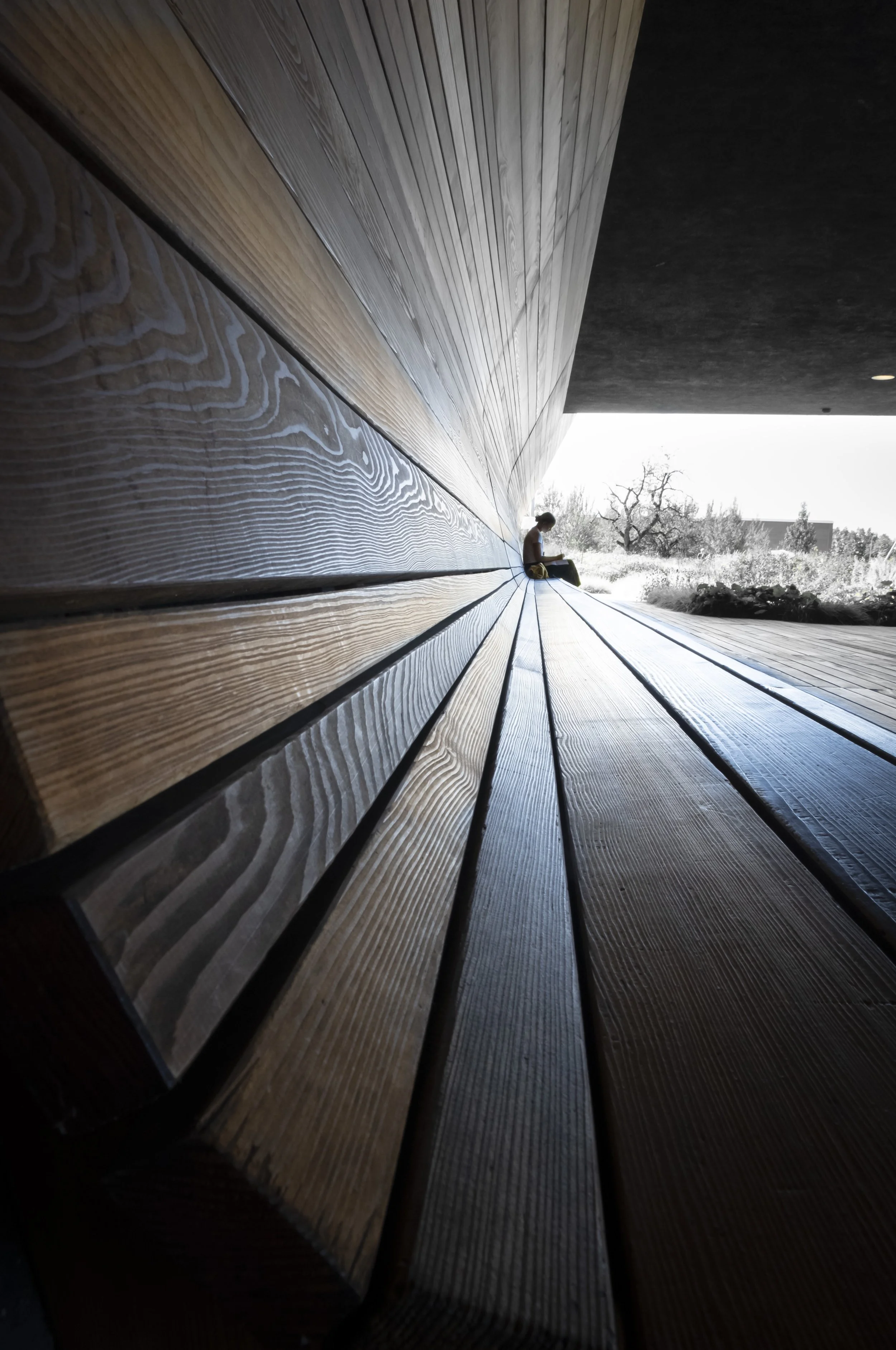
Introspection/Introspezione
Guest: “This is definitely me when I think, spiraling into my mind, but with calmness, leaving the rest of the world outside”.
————————————————————————————————————————————
I took this photo from distance, with a wide angle lens, and the leading lines helped me to isolate the subject and convey a sense of introspection. No distractions in the background, everything leads the focus to the subject (in the same way as when we have introspective moments, and focus on our feelings).
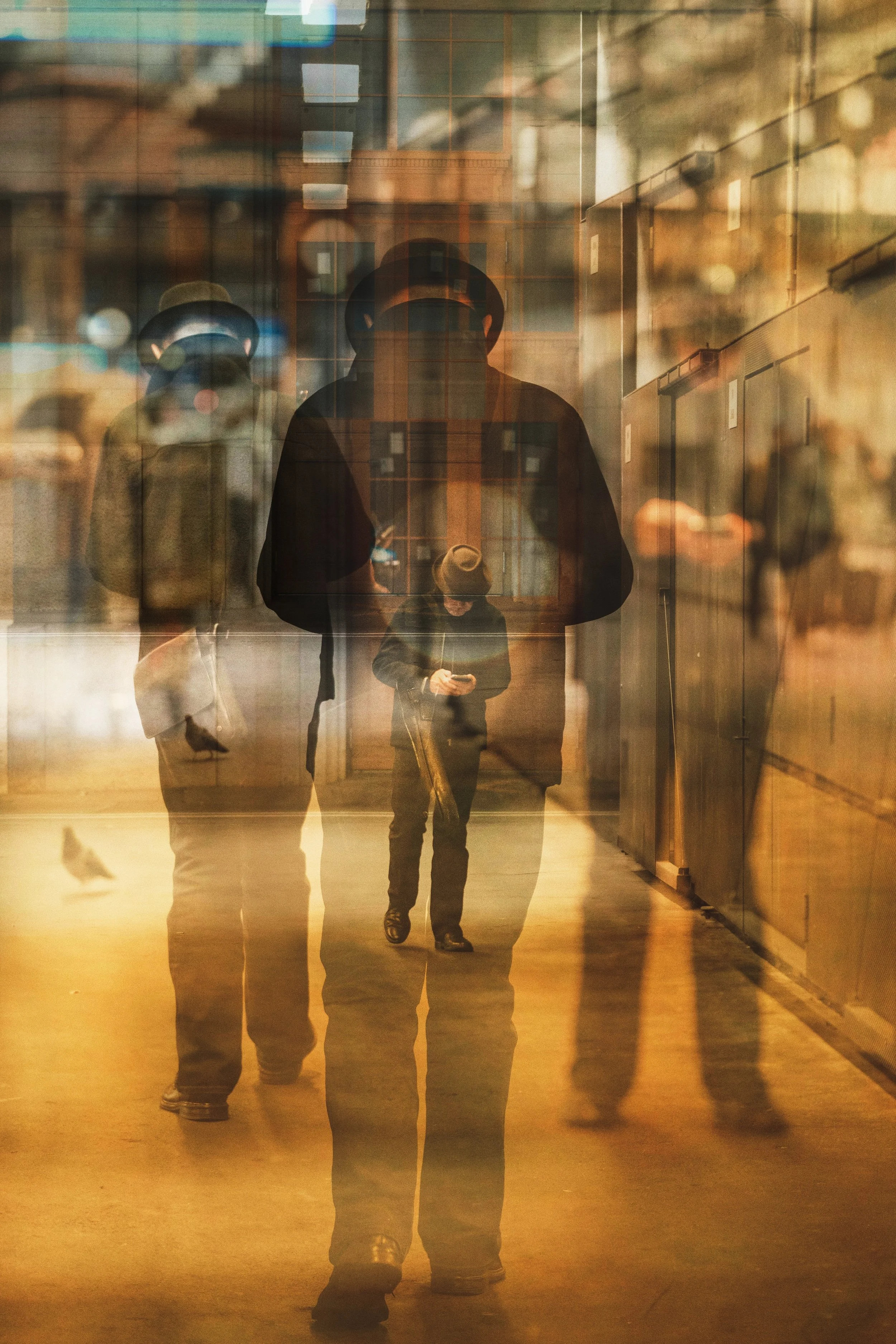
Solitude/Solitudine
Guest: “This scene gives me a punch in the stomach: the man is waiting for someone that will never call him, a person that will never arrive… He is still hoping or maybe he starts understanding that he is completely alone”.
————————————————————————————————————————————
I managed to evoke this feeling with an in-camera multiple exposure, that helped me showing the movement of the man, slowly walking front and back. He is the only subject in the frame, no distractive elements in the frame, with the exception of a pigeon, also alone. The colors are muted.
These 3 photos were shot on my Fujifilm X-T4
Ok, amici, I hope this chat was insightful or, at least, enjoyable (let me know in the comments)!
Have a beautiful Sunday!
Chat photography soon again :)
Very